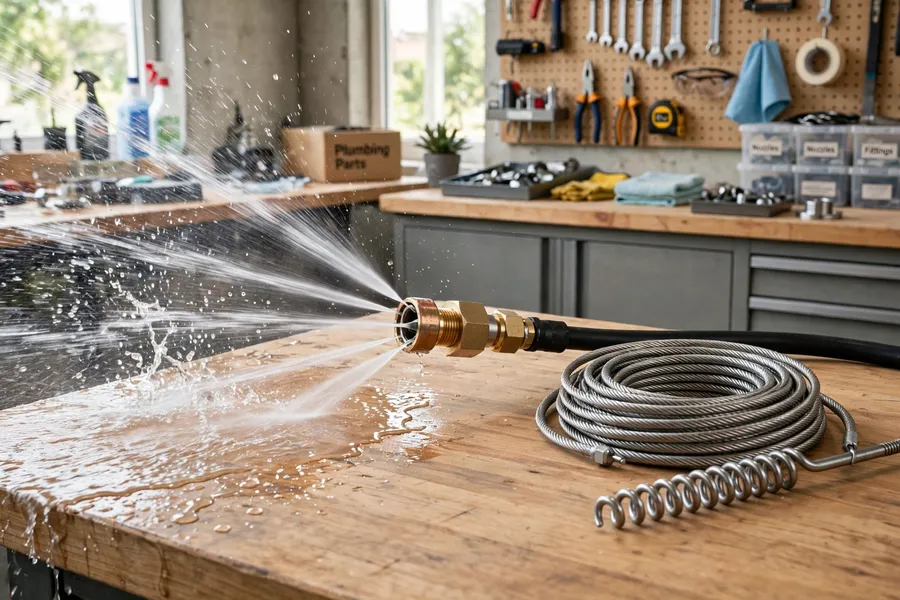
If you've ever watched a drain technician work, you've seen one of two machines: a coiled metal cable spinning into the drain (that's snaking, or augering), or a high-pressure hose blasting water through the pipe (that's hydro jetting). Homeowners often ask which one is "better." The honest answer: they're different tools for different jobs, and using the wrong one is how a simple clog turns into a repeat visit.
Here's how a professional decides, and how you can tell which one your drain actually needs.
What Drain Snaking Actually Does
A drain snake, professionally called an auger, is a flexible steel cable with a cutting or retrieving head on the end. The technician feeds it into the drain while it spins, and the rotating head bores through the blockage, breaks it apart, or hooks it so it can be pulled out.
Snaking is a targeted strike. It punches through the specific clog at a specific spot. It's fast, it's effective for the right kind of blockage, and it's the right first move in many situations. What it doesn't do is clean the pipe. After snaking, the walls of the pipe still carry whatever buildup was there before, which is why some drains clog again months later in the same spot.
What Hydro Jetting Actually Does
Hydro jetting uses a specialized nozzle that shoots water at extremely high pressure, thousands of PSI, in multiple directions at once. As the nozzle moves through the pipe, it doesn't just break the clog; it scours the entire inner surface of the pipe, blasting away grease, sludge, scale, and soap buildup back to the bare pipe wall.
Think of the difference like this: snaking is poking a hole through a clogged artery. Jetting is the full cleaning that restores the artery to its original diameter. Our hydro jetting service is the go-to when the problem isn't one clog but years of accumulation.
When Snaking Is the Right Call
- Single-fixture clogs. One toilet, one sink, one tub, a localized blockage close to the fixture.
- Soft blockages. Hair balls, small foreign objects, wads of paper, things a spinning head can grab or shred.
- First-time clogs. A drain that has never clogged before probably has one discrete blockage, not systemic buildup.
- Older fragile pipes. On very old or damaged lines, a snake is gentler than high-pressure water. A camera check tells us which pipes qualify.
- Quick restoration. When you need that one drain working today and the pipe is otherwise healthy.
When Hydro Jetting Is the Right Call
- Grease-clogged kitchen lines. Grease coats pipe walls in layers that a snake pokes through but never removes. Jetting melts and flushes the whole layer away.
- Recurring clogs in the same line. If you've snaked the same drain twice and it clogged again, the pipe walls themselves are the problem: they need cleaning, not poking.
- Slow drains throughout the house. System-wide sluggishness means system-wide buildup. Jetting restores full diameter across the whole line.
- Preventive maintenance. Restaurants, large households, and homes with big trees benefit from periodic jetting before problems start.
- Before a camera inspection. A jetted pipe gives the clearest camera view: there's a reason we often jet first, then look.
The Honest Comparison
Snaking is faster and less intensive: for the right clog, it's all you need, and a good technician won't upsell you past it. Jetting is more thorough: it takes longer and uses specialized equipment, but it solves the class of problems snaking can't touch.
The most common mistake we see is repeated snaking of a line that actually needs jetting. Each snake visit clears the symptom for a few months while the underlying buildup keeps growing. Two or three repeat visits add up to more frustration than one proper jetting would have.
What About "Just Do Both"?
Sometimes that's exactly what we do. A heavy root intrusion, for example, might need a root-cutting auger first to open the line, followed by jetting to flush the debris and clean the walls. Or we'll snake to restore flow today and recommend jetting as the lasting fix. The sequence depends on what the camera shows: which is why diagnosis comes before the tool choice, not after.
How a Pro Decides in 60 Seconds
When we arrive, we're really answering three questions: Where is the blockage (one fixture or the whole line)? What is it (soft clog, grease, roots, scale)? And what condition is the pipe in? A quick camera look answers all three, and the tool choice becomes obvious. If a company recommends jetting, or snaking: without looking, that's a red flag. The right tool follows the diagnosis, never precedes it.
Still not sure which one your drain needs? Describe the symptoms when you call, how many fixtures are affected, how long it's been happening, whether it's happened before, and we'll bring the right equipment the first time. That's the whole point of professional drain repair: not just clearing today's clog, but making sure it stays cleared.
Frequently Asked Questions
Is hydro jetting safe for old pipes?
It depends on the pipe's condition. We camera-inspect first: on sound pipes, jetting is safe and highly effective. On cracked, collapsed, or extremely fragile lines, we'll recommend a gentler approach instead.
Why does my drain keep clogging after snaking?
Because snaking punches through the clog but leaves buildup on the pipe walls. That remaining buildup catches debris and the clog reforms. Hydro jetting removes the full accumulation, which is why it lasts longer for recurring clogs.
Can hydro jetting remove tree roots?
Jetting flushes out small root hairs and debris, but established root masses usually need mechanical root-cutting heads first. We often combine both: cut the roots, then jet the line clean.
Dealing With One of These Warning Signs?
Don't wait for a backup. Call Bothell Drain Pros, same-day service across Bothell and surrounding areas.
Call (425) 307-0127 Now