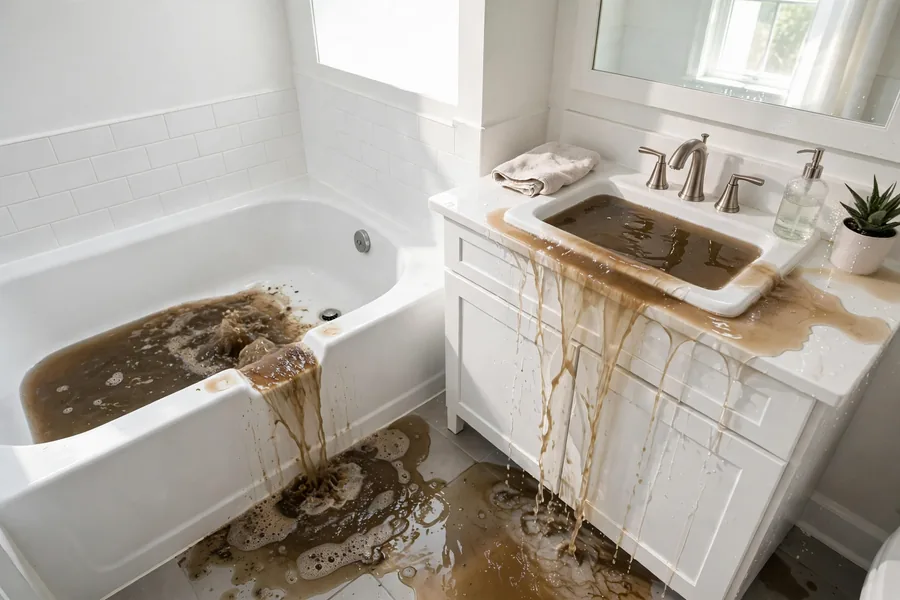
One slow drain is an annoyance. But when the toilet gurgles every time the shower runs, the bathtub starts filling with murky water, and the kitchen sink drains slower by the hour, you are not dealing with several small problems. You are dealing with one big one, and it is almost certainly in your main sewer line.
Understanding the difference between a branch-line clog and a main-line blockage changes how urgently you need to act. Here is how to tell them apart, what causes main line trouble, and what to do the moment you suspect it.
Branch Lines vs. the Main Line: A Simple Picture
Think of your home's plumbing like a tree. Each fixture, the kitchen sink, the bathroom sink, the shower, the toilet, the washing machine, has its own branch line, like a twig. All of those branches feed into one thick trunk: the main sewer line that carries everything out to the city sewer or septic system.
A clog in one twig affects only that fixture. But a blockage in the trunk affects everything upstream of it. That is why multiple fixtures misbehaving at the same time is the signature symptom of a main line problem. The water has nowhere to go, so it starts looking for the nearest exit, which is usually the lowest drain in the house.
The Telltale Signs of a Main Line Blockage
The lowest fixture backs up first. Water seeks the lowest point, so a main line clog often shows up first in a basement floor drain, a ground-floor shower, or a tub. If flushing an upstairs toilet makes water rise in the downstairs shower, that is a textbook main line symptom.
Several fixtures act up together. The toilet gurgles when the washing machine drains. Running the bathroom sink makes the tub bubble. These cross-fixture reactions happen because all the branches share the same blocked trunk.
Toilets are involved. Toilets connect directly to the main line, so toilet trouble combined with slow drains elsewhere is a strong indicator. A toilet that overflows or bubbles when it was not even used is telling you the main line is pushing back.
The problem gets worse quickly. A branch clog is usually stable. A main line blockage escalates, because every flush, shower, and laundry load adds more water behind the blockage with no way out.
What Is NOT a Main Line Problem
It helps to know the other side too. A single slow bathroom sink while everything else drains fine is a local clog, usually hair and soap. A kitchen sink that backs up on its own is a branch line issue, usually grease. The key question is always the same: is it one fixture, or is the whole house involved? One fixture means a branch. The whole house means the main line.
What Blocks a Main Line
Tree roots are the classic cause, growing into older clay or cast iron lines through joints and cracks. Years of grease washed down kitchen sinks can coat and narrow the line. So-called flushable wipes are another frequent culprit; they do not break down the way toilet paper does and they snag on any rough spot. In older homes, a section of pipe can also sag, crack, or collapse, creating a permanent trap for everything flowing past.
A camera inspection is how professionals tell these causes apart, because each one calls for a different fix. Root intrusion gets cut out with specialized equipment, which is exactly what our rooter service handles. Grease buildup responds to hydro jetting. A collapsed section needs repair. Guessing wrong wastes time and money, which is why the camera comes first.
What to Do Right Now
If you suspect a main line blockage, stop using water immediately. Do not run the dishwasher, do not do laundry, and avoid flushing unless necessary. Every gallon you send down adds pressure behind the blockage and brings a backup closer. Skip the chemical drain cleaners entirely, they will not reach a main line clog and they make the eventual professional job messier and more hazardous.
Then call. A main line blockage is one of the few drain problems that genuinely qualifies as urgent, because the downside, sewage backing up into living spaces, is severe and it can happen fast. Our emergency drain cleaning team is available around the clock for exactly this situation, and the sooner a technician gets eyes on the line, the smaller the mess stays.
What the Technician Will Do First
Knowing what happens next can make the wait less stressful. The technician's first job is to confirm the diagnosis, usually by checking the lowest fixtures and running a camera into the line through a cleanout. The camera reveals the cause, roots, grease, wipes, or pipe damage, and its exact location, which determines the fix. A soft blockage like grease or wipes is typically cleared with an auger or hydro jetting. Root intrusion gets cut out with rooter equipment. A collapsed or badly broken section is a different conversation, and the camera footage lets you see exactly why.
One thing a good technician will not do is start with the most expensive option. The camera comes first precisely so the fix matches the problem. If anyone proposes major work on your main line without showing you camera footage of the damage, that is your cue to get a second opinion before agreeing to anything.
Frequently Asked Questions
How can I tell if it is the main line or just one clogged drain?
If only one fixture is slow, it is probably a local clog. If several fixtures back up or gurgle together, especially the lowest ones, it is the main line.
Is a main line blockage an emergency?
Yes. Every flush and every running tap adds water behind the blockage, so it gets worse fast and can push sewage back into the home.
Should I keep trying to plunge a main line blockage?
No. Plunging rarely reaches a main line clog and can push wastewater up through other fixtures. Stop using water and call for help.
Several Fixtures Backing Up?
That is a main line emergency. Call Bothell Drain Pros now for fast help across Bothell and nearby areas, we answer around the clock.
Call (425) 307-0127 Now