Bothell has neighborhoods full of charming mid-century homes, and many of them are still running on their original plumbing. If you own one of these houses, you have probably wondered whether its age means you should be thinking about the drains more often than a newer home would require. The honest answer: usually, yes, but not for the reasons most people assume.
It is not that older pipes are fragile. It is that they were built differently, from different materials, in a different era of plumbing, and those differences change how they age. Here is what actually matters.
Pipe Materials Tell the Story
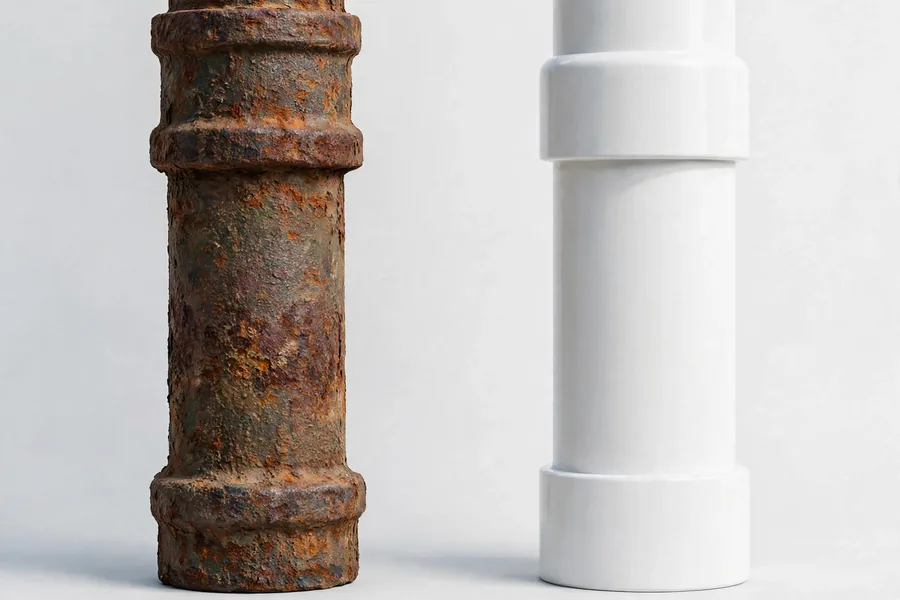
Modern homes use PVC or ABS plastic pipe: smooth, jointed every ten feet or more, and highly resistant to corrosion and root intrusion. Older Bothell homes, particularly those built before the 1970s, commonly have clay tile or cast iron sewer lines. Clay pipe comes in short sections, which means many joints, and every joint is a place where roots can enter and where the ground shifting over decades can create offsets. Cast iron is strong but corrodes from the inside over time, developing a rough, scaly surface that snags debris and narrows the pipe.
Neither material is an automatic emergency. Plenty of clay and cast iron lines are still doing their job after fifty years. But they have more ways to develop problems than modern plastic, which is why they benefit from more attention.
Why Age Changes the Maintenance Picture
More joints, more entry points. A clay tile line might have a joint every three or four feet. After decades of ground movement, some of those joints open slightly, inviting root intrusion and catching passing debris.
Interior corrosion narrows the pipe. Cast iron develops tuberculation, rough mounds of corrosion inside the pipe. The rougher the interior, the faster grease, soap, and solids accumulate, which means clogs form more easily than they would in smooth pipe.
Settling creates bellies. Over decades, sections of buried pipe can settle unevenly, creating low spots where water and solids collect. A belly will keep causing trouble at the same spot no matter how often the drain is cleared, until the pipe itself is addressed.
Mature landscaping. Older homes tend to have older, larger trees, and their root systems have had decades to explore. If the sewer line runs anywhere near a big tree, root intrusion is a question of when, not if.
Signs Your Older Home's Drains Want Attention
You do not need a schedule to tell you something is changing; the house will say so. Watch for drains that are gradually slowing across multiple fixtures, gurgling sounds that were not there before, clogs that return to the same spot, and any sewer odors around drains or in the yard. Any one of these in an older home is worth a camera inspection, because catching a developing problem early is dramatically simpler than dealing with it after a backup.
A camera inspection is genuinely the best first step for an older home, even without symptoms. It shows the pipe material, its condition, and any roots, bellies, or corrosion already developing. With that baseline, you and your plumber can make real decisions instead of guessing. If you are in one of our Kenmore or Bothell area service neighborhoods, this kind of preventive look is one of the smartest things an older-home owner can do.
What Sensible Maintenance Looks Like
There is no magic number of months that applies to every house, because every line is different. But a reasonable rhythm for an older home with clay or cast iron pipe is a professional look every couple of years, a camera inspection of the main line, plus prompt attention to any symptom rather than a wait-and-see approach. Homes with known root issues may benefit from periodic rooter service before the roots become a blockage, since cutting young roots is quick and cutting a mature root ball is not.
Between visits, the same habits that protect any home matter even more in an older one: keep grease out of the kitchen sink, never flush wipes, use hair catchers in showers, and treat the first sign of trouble as information, not an inconvenience. Older plumbing is not a liability if you stay ahead of it. It just asks for a little more respect than the plastic pipe in a new build, and it rewards that respect with decades more service. Our drain cleaning team works with vintage Bothell plumbing every week and can help you figure out what your specific home actually needs.
Clay vs. Cast Iron: What Each One Needs
The two common vintage materials age differently, so it helps to know which one you have. Clay tile pipe fails at the joints: roots enter, sections shift, and offsets catch debris. The maintenance priority for clay is watching for root intrusion and joint separation, which a camera shows clearly. Cast iron fails from the inside: corrosion roughens and narrows the pipe, and eventually the bottom of the pipe can rust through entirely. The priority for cast iron is monitoring interior condition and buildup, since the pipe can look fine from outside while deteriorating within.
In both cases, the camera inspection is what turns a vague worry about old pipes into specific knowledge. And in both cases, catching the problem at the intrusion or buildup stage keeps the solution simple. The homeowners who get surprised are almost always the ones who never looked.
Frequently Asked Questions
How do I know what kind of pipes my home has?
The home's age is the best clue: pre-1970s homes often have clay or cast iron, while newer homes typically use PVC or ABS. A camera inspection can confirm exactly what is down there.
Do older pipes always need replacing?
No. Many older lines are still perfectly serviceable. Age alone is not a verdict; a camera inspection shows whether the pipe is sound or failing.
What is the simplest maintenance step for an older home?
Have the main line inspected with a camera every couple of years. It catches root intrusion and developing problems while the fixes are still small.
Own an Older Bothell Home?
Vintage plumbing rewards a little attention. Call Bothell Drain Pros to talk through a sensible maintenance plan for your home's pipes.
Call (425) 307-0127 Now