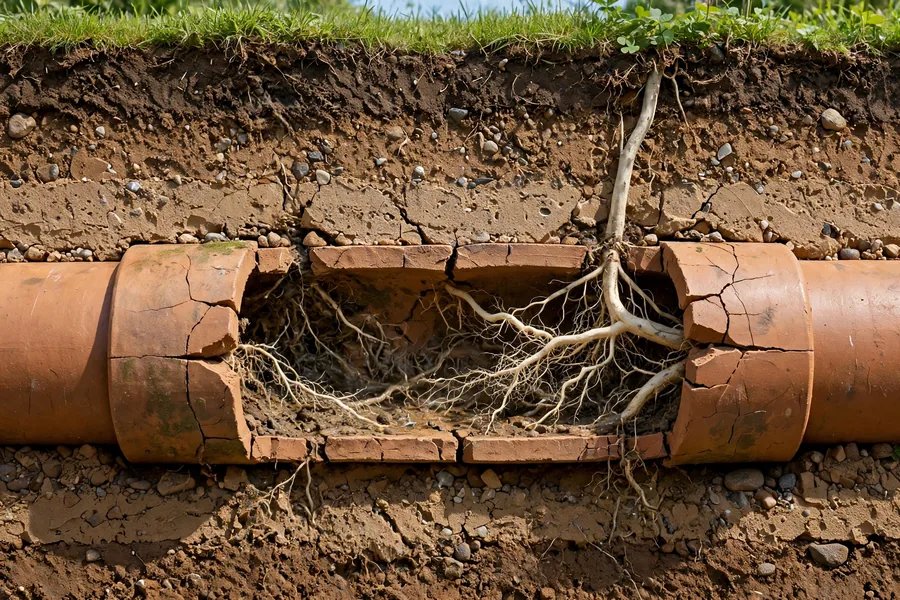
A big, healthy tree in the yard is something most homeowners love, right up until its roots find the sewer line. Roots are drawn to the moisture and nutrients inside underground pipes, and once they find a tiny opening, they settle in and grow. For Bothell homeowners with older homes and mature landscaping, root intrusion is one of the most common causes of stubborn sewer problems.
The tricky part is that root damage happens silently, underground, for months or years before you notice anything. By the time symptoms show up, the roots are usually well established. Here are the five signs that tree roots may have moved into your sewer line, and what to do about each one.
How Roots Get Into Pipes in the First Place
Roots do not punch through solid, healthy pipe. They slip in through openings that already exist: the joints between sections of older clay or cast iron pipe, hairline cracks, and loose connections. Older Bothell homes, especially those built before the 1980s, often have clay tile or cast iron sewer lines with many joints, and each joint is a potential entry point. A root hair thinner than a thread is all it takes to start.
Once inside, the root finds a constant supply of water and nutrients, so it grows, branches, and thickens. Over time it can fill the pipe, trap paper and waste, and even crack the pipe open wider. Our sewer camera inspection service exists largely for this detective work: the camera shows exactly where roots entered and how far the damage goes.
Sign 1: Drains Are Slow All Over the House
One slow sink is usually a local clog. But when the tub, the shower, the kitchen sink, and the toilet all start draining slowly around the same time, the blockage is probably in the main line, and roots are a prime suspect. The roots form a net inside the pipe that catches everything passing through, so drainage gets worse gradually rather than stopping all at once.
Sign 2: Gurgling Sounds From Toilets and Drains
When water cannot flow freely past a root mass, air gets trapped and pushed back up through the drains. That is the gurgling or bubbling you hear when you flush or run the sink. Gurgling that involves more than one fixture, especially a toilet gurgling when the washing machine drains, is a classic main-line symptom worth taking seriously.
Sign 3: Clogs That Keep Coming Back
If you have had the same drain cleared more than once and the clog returns within weeks or months, the underlying problem was never fully removed. A drain auger can punch a hole through a root ball, restoring flow temporarily, but the roots remain and regrow. Recurring clogs in the same area are the pipe's way of telling you the real blockage is still in there. This is exactly what our rooter service is designed to handle: cutting roots out at the source instead of poking temporary holes through them.
Sign 4: Soggy Spots or Sinkholes in the Yard
When roots crack a pipe open, wastewater can leak into the surrounding soil. That shows up as an unusually lush green patch of grass, a persistently soggy area, or in worse cases a small depression where soil has washed into the broken pipe. If one section of your lawn looks far healthier than the rest and sits roughly along the path to the street, pay attention to it.
Sign 5: Sewage Backups or Foul Odors
This is the sign nobody wants, and it means the root blockage has become severe. Sewage backing up into a floor drain, tub, or toilet, or a strong sewer smell around drains or in the yard, signals a line that is nearly or fully blocked. At this stage, stop using water in the house and call for help right away, because every flush adds pressure behind the blockage.
What to Do If You Suspect Roots
The first step is always a camera inspection, because you cannot fix what you cannot see. The footage shows where the roots entered, how much of the pipe they occupy, and whether the pipe itself is cracked or collapsed. With that information, a technician can cut the roots out with specialized rooter equipment and tell you honestly whether the pipe is still sound or needs repair.
After the roots are cleared, prevention matters. Avoid planting large, thirsty trees near the sewer line, and consider having the line inspected every couple of years if your home has older clay or cast iron pipe. Catching root regrowth early, while it is still a thin intrusion, keeps the fix small and simple instead of letting it become an emergency.
How Professionals Actually Remove Roots
It is worth knowing what proper root removal looks like, so you can tell it apart from a quick fix. A technician feeds a specialized cutting head into the line on a rooter cable. The head has sharp, spinning blades sized to the pipe, and it shreds the root mass as it travels, flushing the debris out with water. This is very different from poking a hole through the roots with a standard auger, which is why rooter service costs more than a basic snaking visit and lasts far longer.
After cutting, a good technician runs the camera again to confirm the line is truly clear and to check the pipe's condition at the entry points. That second look is what turns root removal from guesswork into a verified result. You may also hear about chemical root killers, usually copper sulfate products poured down the drain. These can slow regrowth temporarily, but they do not remove an established root mass, and repeated use can harm nearby plants and landscaping. Think of them as a possible maintenance aid after a professional cutting, never as the fix itself.
Frequently Asked Questions
Can tree roots really break a sewer pipe?
Yes. Roots enter through tiny cracks and joints, then grow thicker until they crack the pipe open or block it completely.
Which trees cause the most sewer problems?
Fast-growing, water-hungry trees like willows, maples, and cottonwoods are the usual suspects, but any large tree near the line can be a problem.
Will cutting the roots fix the problem permanently?
Cutting clears the blockage, but roots grow back. A camera inspection shows the pipe condition so you can plan a longer-term fix.
Suspect Roots in Your Line?
Do not let roots keep growing. Call Bothell Drain Pros for a camera inspection and rooter service across Bothell and nearby areas.
Call (425) 307-0127 Now