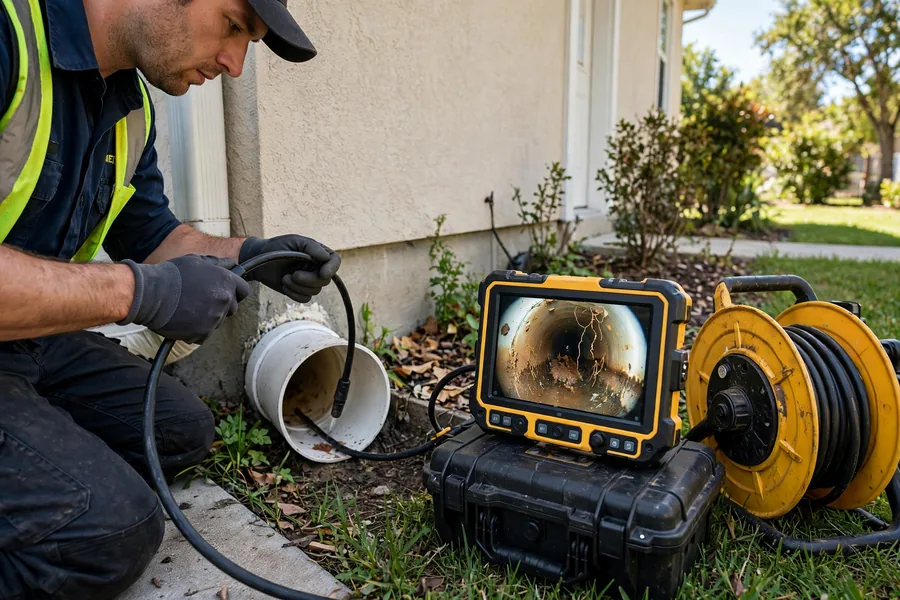
When a drain problem keeps coming back, or when a plumber needs to know what is happening inside a pipe they cannot see, there is one tool that settles the question: a sewer camera. A sewer camera inspection sends a small, waterproof camera through your pipes on a flexible cable, and the live video shows exactly what is going on down there.
It sounds simple, and it is, but it changes everything about how drain problems get diagnosed. Here is what the camera actually does, what it can find, and the situations where it is worth having one done.
How a Sewer Camera Inspection Works
The equipment is straightforward. A high-resolution camera, about the size of a marble, sits at the end of a long, flexible push rod. The technician feeds it into the pipe through an access point, usually an outdoor cleanout, a floor drain, or a pulled toilet. As the camera travels, it sends live video to a monitor above ground, so you can watch the inside of your own pipes in real time.
Most camera heads also carry a small transmitter. A locator wand above ground picks up the signal, which lets the technician mark the exact spot and depth of anything interesting on the surface. That matters when a repair is needed, because it means digging in one precise spot instead of tearing up the whole yard.
What the Camera Can Actually See
The footage reveals the pipe's real condition, not a guess based on symptoms. A trained eye can spot tree root intrusion and pinpoint where the roots entered. It shows cracks, breaks, and collapsed sections, as well as bellies, the sagging spots where water and debris collect. Heavy grease or scale buildup shows up clearly, and so do foreign objects: toys, wipes, construction debris, and the occasional surprise.
Just as valuable is what the camera rules out. A line that looks clean and sound on camera tells you the problem is elsewhere, which saves you from paying for work you do not need. Our sewer camera inspection service is built around that honesty: the footage is the evidence, and it belongs to you.
When You Actually Need One
Recurring clogs. If the same drain or the main line keeps blocking after being cleared, the camera shows whether you are dealing with buildup, roots, or a damaged pipe, so the fix can target the real cause.
Before buying a home. A sewer line problem can be one of the most expensive surprises a new homeowner faces, and a standard home inspection does not look inside the pipes. For older Bothell homes especially, a camera inspection before closing is cheap insurance.
Before major drain or sewer work. Any significant repair should start with knowing exactly what is wrong and where. Camera footage turns a vague, expensive-sounding project into a precise one.
Unexplained odors or soggy yard spots. Sewer smells around drains or in the yard, or a suspiciously lush patch of grass, can mean a cracked line leaking underground. The camera confirms it and locates the break.
Slow drainage throughout the house. When every fixture drains slowly, the main line is suspect, and the camera will show whether the culprit is roots, buildup, or a structural problem.
What a Camera Inspection Does Not Do
It is worth being clear about the limits. The camera diagnoses; it does not fix. Finding roots on camera still requires a separate visit with rooter equipment to cut them out. The camera also needs access, a usable cleanout or drain opening, and in rare cases where no access exists, one may need to be installed first. Finally, the footage is only as good as the person reading it, which is why the technician's experience matters as much as the equipment.
What Happens With the Footage
A good inspection ends with you understanding what you saw. The technician should walk you through the footage, point out anything abnormal, and explain what it means in plain language. Ask for a copy of the video, it is your record, and it is useful if you ever need a second opinion or want to compare the pipe's condition years later. When a problem is found, the footage also lets you get honest, comparable input on next steps, because everyone is looking at the same evidence.
What a Good Inspection Report Looks Like
Not all camera inspections are equal, so it helps to know what a thorough one includes. The video itself should have on-screen distance markers, so any problem can be located by footage, for example, roots at 42 feet from the access point. The technician should note the pipe material and diameter, the locations of any defects, and the overall condition in plain terms. Ask for the recording to be saved and shared with you, along with a short written summary of the findings.
A few questions separate a careful inspection from a rushed one. Ask where the camera entered and how far it traveled, whether the full line to the street or septic connection was covered, and what the technician recommends watching over time versus fixing now. If roots or damage were found, ask to see the exact spot on the footage and have it marked. A professional who welcomes these questions is showing you the same confidence the camera gives you: nothing to hide, everything visible.
One last practical note: schedule the inspection for a time when you can be present and watch the monitor. Seeing the inside of your own pipes is oddly fascinating, and being there means you can ask questions in the moment instead of trying to reconstruct them later from a written summary. Most technicians are happy to narrate as they go, and you will walk away understanding your plumbing better than most homeowners ever do.
Frequently Asked Questions
Does a camera inspection require digging?
No. The camera goes in through an existing access point like a cleanout or drain opening, so there is no digging and no mess.
How long does a sewer camera inspection take?
Most residential inspections take under an hour. The technician feeds the camera through the line and goes over the footage with you on the spot.
Can a camera inspection find tree roots?
Yes, that is one of its best uses. The camera shows exactly where roots entered, how much of the pipe they occupy, and whether the pipe is damaged.
Want to See Inside Your Pipes?
Stop guessing about clogs and pipe damage. Call Bothell Drain Pros for a sewer camera inspection with clear answers, serving Bothell and nearby areas.
Call (425) 307-0127 Now