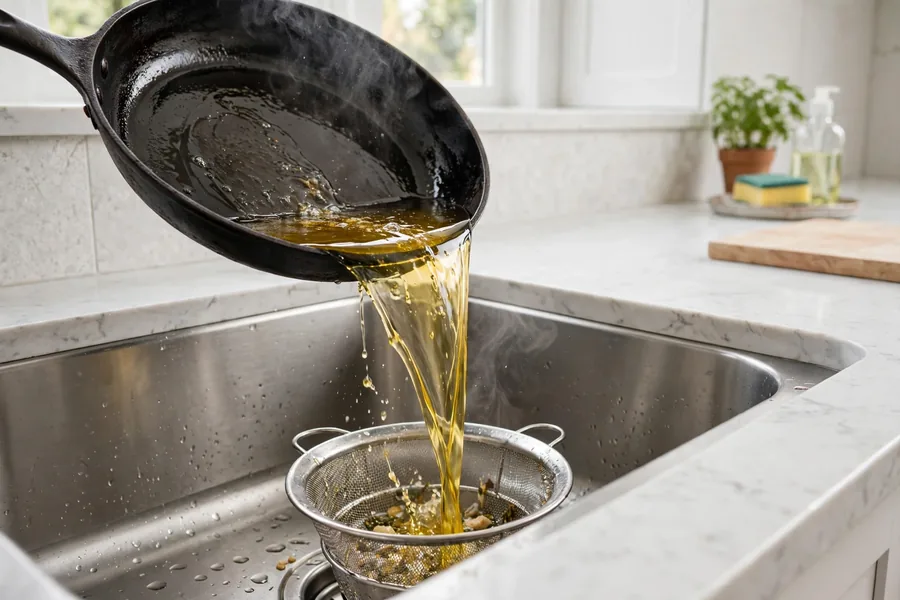
The kitchen sink feels like it can handle anything. Scrape the plate, rinse the pan, run the water, and it all disappears. But your drain has a long memory, and some of the most ordinary kitchen habits are quietly building the clog that will ruin a future weekend. Plumbers see the same culprits again and again, so here is the honest list of what should never go down your kitchen drain.
1. Grease, Fats, and Cooking Oil
This is the number one offender, by a wide margin. Bacon grease, meat drippings, butter, and cooking oil all go down as liquids and harden inside your pipes as they cool, coating the walls layer by layer. Over months and years, that coating narrows the pipe until even normal use cannot get through. Hot water helps move soap and light grease through, but it cannot clear grease that has already built up; heavier grease only travels deeper before it solidifies, moving the eventual clog further down the line.
What to do instead: let grease cool in the pan, then wipe it out with a paper towel into the trash. For larger amounts of cooking oil, pour it into a sealed container and throw it away. If grease has been going down your drain for years, the buildup is probably already significant, which is something our clogged drain repair service deals with every week.
2. Coffee Grounds
They seem harmless, small and gritty, like they would just wash through. Instead, coffee grounds clump together in pipes and combine with grease into a dense, cement-like sludge. Unlike some food scraps, grounds do not break down in water at all. They just accumulate. Toss them in the trash or, better, the compost pile, where they are genuinely useful.
3. Eggshells
The old advice says eggshells sharpen garbage disposal blades. In reality, the ground-up shell fragments stick to grease-coated pipe walls and add to the buildup, and the thin membrane inside the shell can wrap around disposal parts. They belong in the trash or compost, not the drain.
4. Starchy Foods: Pasta, Rice, and Potato Peels
Starch plus water makes paste, and that is exactly what happens inside your pipes. Pasta and rice swell as they absorb water, turning a small amount of leftovers into a much larger blockage. Potato peels are especially bad: ground up, they form a thick, starchy slurry that plumbers compare to wallpaper paste. Scrape starchy leftovers into the trash, and peel potatoes over a bowl or trash can, not the sink.
5. Fibrous Vegetable Scraps
Celery strings, onion skins, corn husks, and artichoke leaves do not grind up cleanly. Their long fibers tangle around disposal parts and snag on any rough spot inside the pipes, creating a net that catches everything else coming down. These belong in the trash or compost without exception.
6. So-Called Flushable Wipes
They may say flushable on the package, but wipes do not disintegrate like toilet paper. In kitchen drains they are less common, but in homes where wipes get used for quick counter cleanups and rinsed in the sink, they cause the same havoc they cause in toilets: snagging, clumping, and forming the core of major blockages. Trash them, always.
7. Harsh Chemicals and Paint
Pouring paint, solvents, or harsh chemicals down the drain is bad for your pipes and worse for everything downstream. Paint hardens and coats pipes, chemicals can corrode older plumbing, and both end up in the wastewater system where they do not belong. Take them to a household hazardous waste collection point instead.
If the Damage Is Already Done
Most kitchens have years of small sins behind them, so do not feel guilty, just change the habits going forward. Scrape plates into the trash before rinsing, keep a grease jar by the stove, and run cold water (not hot) for a few seconds after using the disposal, since cold water keeps any residual grease solid so it can be carried through rather than coating the pipe.
If the sink is already draining slowly despite better habits, the buildup is already there and it will not dissolve on its own. That is the point where a professional cleaning earns its keep: getting the pipe walls back to bare, full-diameter pipe so your good habits actually pay off.
The Garbage Disposal Myth
Many people treat the garbage disposal as permission to send anything down the drain. It is not. A disposal does one thing: it chops food into smaller pieces. Smaller pieces of grease are still grease, smaller pieces of potato peel still make paste, and fibrous scraps still tangle, just in smaller strands. Everything on the list above is still a problem with a disposal in the mix.
That said, a disposal used correctly is fine. Feed it small amounts of soft food scraps with plenty of cold water running, and let the water run for fifteen seconds after it finishes grinding. Cold water matters: it keeps fats solid so they get carried through the line instead of melting and coating the pipe walls further down. And when in doubt, the trash can is always the safer choice. Your disposal is a convenience, not a second trash can, and treating it like one is how kitchen drains earn their reputation.
It also helps to know what a healthy kitchen drain sounds and looks like. Water should swirl away quickly with no lingering gurgle, and the sink should empty completely within seconds of pulling the stopper. If you notice the water hesitating, swirling slowly, or leaving a ring of residue, that is early-stage buildup talking. A plumber's snake or a jetting service at that stage is a small job; waiting until the sink will not drain at all turns it into a much bigger one.
Frequently Asked Questions
Is it okay to pour grease down the drain if I run hot water with it?
No. The hot water only carries the grease further down before it cools and hardens. The clog just forms deeper in the line where it is harder to reach.
Are garbage disposals a safe alternative?
A disposal chops food smaller, but it does not make grease, starch, or fibrous scraps safe for your pipes. The same list applies with or without a disposal.
What should I do with used cooking oil?
Let it cool, pour it into a sealed container like an old jar or bottle, and put it in the trash. Many areas also have cooking oil recycling drop-off points.
Kitchen Drain Already Slow?
Grease buildup does not clear itself. Call Bothell Drain Pros for clogged drain repair with same-day service across Bothell and nearby areas.
Call (425) 307-0127 Now