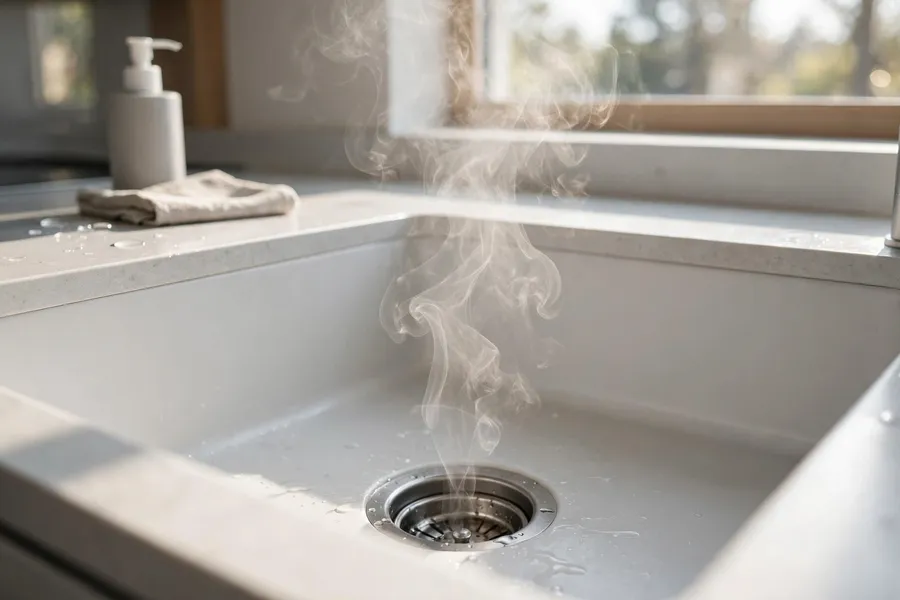
You walk into the kitchen, catch a whiff of rotten eggs, and immediately check the trash. Trash is fine. Then you lean toward the sink: and there it is. That sulfurous, eggy smell is coming from the drain itself.
Homeowners describe it differently: a sewer smell in the house, a sulfur smell by the sink, a rotten-egg stink from the drain. It is the same problem. It's one of the most common complaints we hear, and the good news is that it almost always has an identifiable cause. Here's what's actually happening down there, what's harmless, and when that smell is telling you to call someone.
The Short Answer: It's Hydrogen Sulfide Gas
That rotten-egg smell is hydrogen sulfide, a gas produced when organic matter decomposes without enough oxygen. Inside your drains, that means food particles, grease, soap scum, and hair are sitting in the pipe, slowly rotting, and releasing gas. The smell itself is the symptom; the buildup is the disease.
Your plumbing has a built-in defense against this: the P-trap. That U-shaped bend under every sink holds a plug of water that blocks sewer gases from rising into your home. When the system works, you smell nothing. When you smell eggs, either the trap has failed or the buildup has gotten bad enough to overwhelm it.
Cause #1: A Dried-Out P-Trap (the Easy Fix)
This is the most common cause in guest bathrooms, basement floor drains, and laundry sinks that don't get used often. Water in the P-trap evaporates over a few weeks of disuse, the seal breaks, and sewer gas flows freely up into the room.
The test: pour a few cups of water into the drain and wait an hour. If the smell fades, that was it. For drains you rarely use, make it a monthly habit: or add a teaspoon of mineral oil after the water, which slows evaporation. If the smell comes back within days despite regular use, move on to cause #2.
Cause #2: Buildup and Biofilm in the Drain
In kitchen sinks especially, a living layer of bacteria, biofilm, coats the inside of the pipe and the drain assembly. It feeds on everything you wash down: food bits, grease, coffee grounds, soap. As it digests, it releases hydrogen sulfide continuously. This is why the smell is often strongest in the kitchen and why it persists no matter how much air freshener you use.
Surface cleaning doesn't reach it. The biofilm lives past the drain opening, down in the pipe where brushes and bleach can't scrub. This is a cleaning problem, not a deodorizing problem: and it's one of the most satisfying fixes we do, because hydro jetting strips biofilm off pipe walls completely. Homeowners are always surprised how "new" their kitchen smells afterward.
Cause #3: Garbage Disposal Grime
Disposals are smell factories when neglected. Food particles get flung into every crevice of the disposal chamber and the rubber splash guard, where they rot. If the eggy smell intensifies when you run the disposal, you've found your culprit.
Drop a tray of ice cubes and a sliced lemon in, run cold water, and turn it on, the ice scours the chamber walls. Do this monthly. But if the smell lives in the drain beyond the disposal, or returns within days of cleaning, the buildup extends into the line itself and needs professional attention.
Cause #4: Sewer Line Problems (Take This Seriously)
Sometimes the smell isn't coming from one drain: it's everywhere, or it's strongest in the basement, or it comes with gurgling and slow drainage. That pattern points past the fixtures to the main sewer line: a partial blockage trapping waste, a cracked line letting gases escape, or a venting problem preventing proper airflow.
Sewer gas isn't just unpleasant: at high concentrations it's a health concern, and it signals a real plumbing failure. If the rotten-egg smell is house-wide, persistent despite cleaning, or paired with any drainage symptoms, don't troubleshoot it yourself. A sewer camera inspection will show exactly what's happening in the line, and from there the fix is usually straightforward.
What Doesn't Work (Despite What the Internet Says)
- Pouring bleach down the drain. It kills surface bacteria and masks the smell for a day. The biofilm deeper in the pipe survives, and bleach can damage older pipes and septic systems.
- Baking soda and vinegar volcanoes. Fun to watch, nearly useless for real buildup. The fizz doesn't reach or remove the bacterial layer causing the gas.
- Boiling water. Helps move light grease, does nothing for established biofilm, and can soften PVC joints if overdone.
These aren't scams; they're just mismatched to the problem. Deodorizing treats the smell. You need to remove what's rotting.
The Bottom Line
Start with the simple check: refill any dry traps and clean the disposal. Give it a day. If the rotten-egg smell persists, especially in a regularly used kitchen sink: you're dealing with buildup or biofilm inside the line, and that's a cleaning job, not a DIY deodorizing project. And if the smell is everywhere or comes with drainage trouble, treat it as the sewer warning it is and get a professional look.
Nobody should have to live with a kitchen that smells like sulfur. It's fixable, usually in a single visit: and once it's gone, you'll wonder why you waited.
Frequently Asked Questions
Is a rotten egg smell from drains dangerous?
In small amounts from a single drain, it's unpleasant but not an emergency, it's usually just biofilm buildup. A strong, house-wide sewage smell can indicate a sewer line issue and deserves prompt professional attention.
Why does only my kitchen sink smell like rotten eggs?
Kitchens produce the most organic waste, food, grease, soap, which feeds the bacteria that create hydrogen sulfide gas. A biofilm coating inside the kitchen drain line is the usual cause, and professional cleaning removes it completely.
Will the smell come back after professional cleaning?
A thorough cleaning removes the existing buildup entirely. With normal habits, strainers, no grease down the drain, occasional disposal cleaning, it typically stays gone. Heavy-use kitchens may benefit from periodic maintenance cleaning.
Dealing With One of These Warning Signs?
Don't wait for a backup. Call Bothell Drain Pros, same-day service across Bothell and surrounding areas.
Call (425) 307-0127 Now